

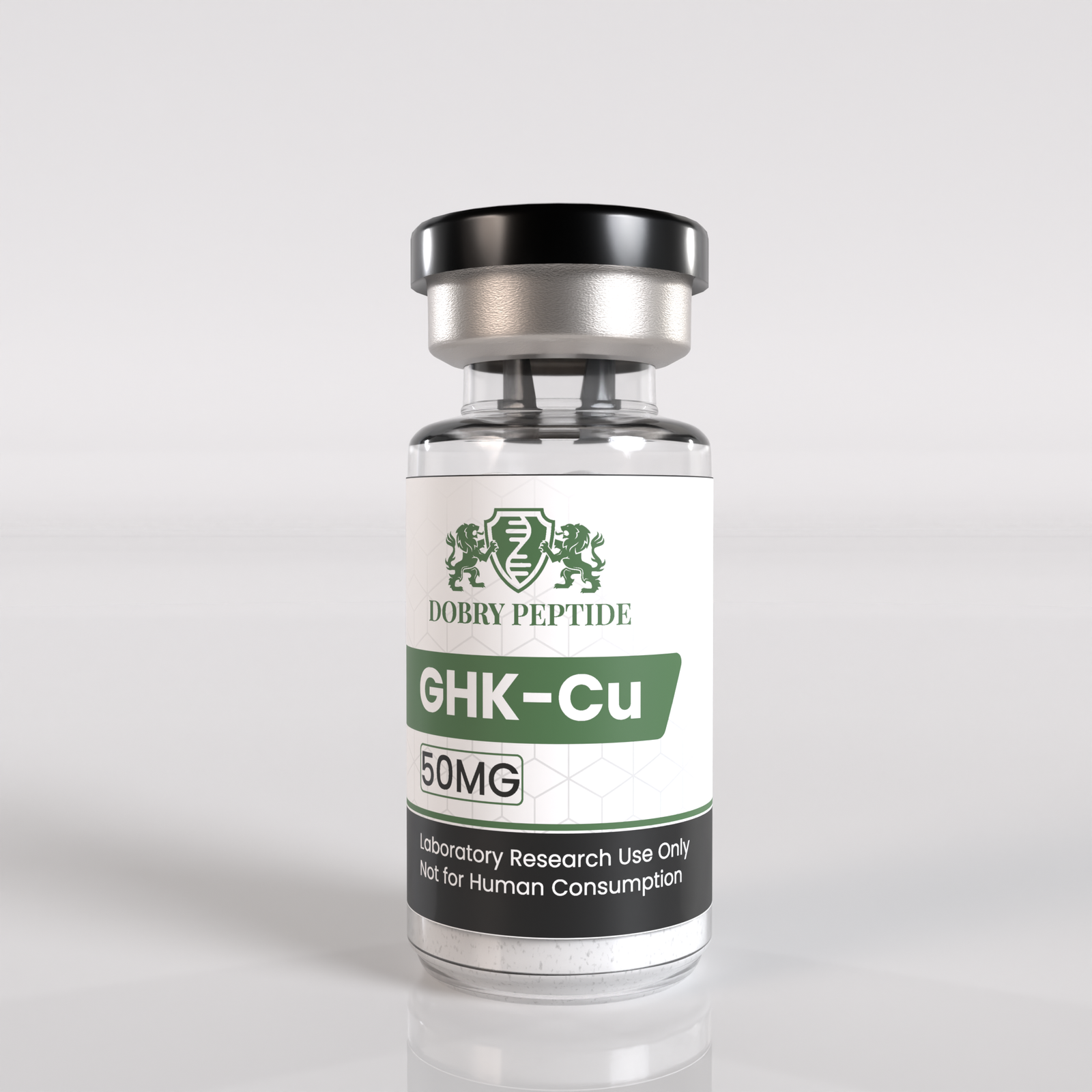
GHK-Cu
GHK-Cu, also known as copper tripeptide-1, is a naturally occurring copper-binding peptide composed of the amino acids glycine, histidine, and lysine complexed with a copper ion. At Dobtry Peptides, GHK-Cu is supplied exclusively for laboratory research and in-vitro scientific investigation.
This peptide is extensively studied in experimental models focused on tissue regeneration, extracellular matrix remodeling, and cellular signaling pathways. GHK-Cu is valued in research settings for its involvement in copper-dependent biological processes and its broad relevance across multiple cellular systems.
Overview
GHK-Cu plays an important role in regulating cellular communication, gene expression, and structural protein signaling. In laboratory environments, it is commonly utilized to study wound-healing pathways, collagen synthesis signaling, and oxidative stress regulation.
Due to its strong affinity for copper ions, GHK-Cu serves as a reliable research compound for examining metal-dependent enzymatic activity and cellular repair mechanisms under controlled experimental conditions.
- Supports investigation of cellular regeneration and repair pathways
- Widely studied in extracellular matrix and tissue remodeling research
- Involved in copper-dependent cellular signaling mechanisms
- Non-hormonal and non-anabolic research peptide
- Suitable for in-vitro and preclinical laboratory investigations
Specifications
- Peptide Type: Copper-binding tripeptide
- Amino Acid Sequence: Gly-His-Lys (GHK)
- Molecular Formula: C14H24N6O4Cu
- Molecular Weight: Approximately 401 Da
- Alternate Names: GHK-Cu, Copper Tripeptide-1
Research Insights
Cellular Regeneration and Repair
GHK-Cu is widely researched for its involvement in cellular regeneration mechanisms and signaling pathways related to tissue repair and recovery.
Extracellular Matrix and Structural Signaling
Research models examine GHK-Cu’s role in collagen synthesis signaling, matrix remodeling, and cellular structural integrity.
<h4
| Size | 100MG, 50MG |
|---|
Reviews
There are no reviews yet.