

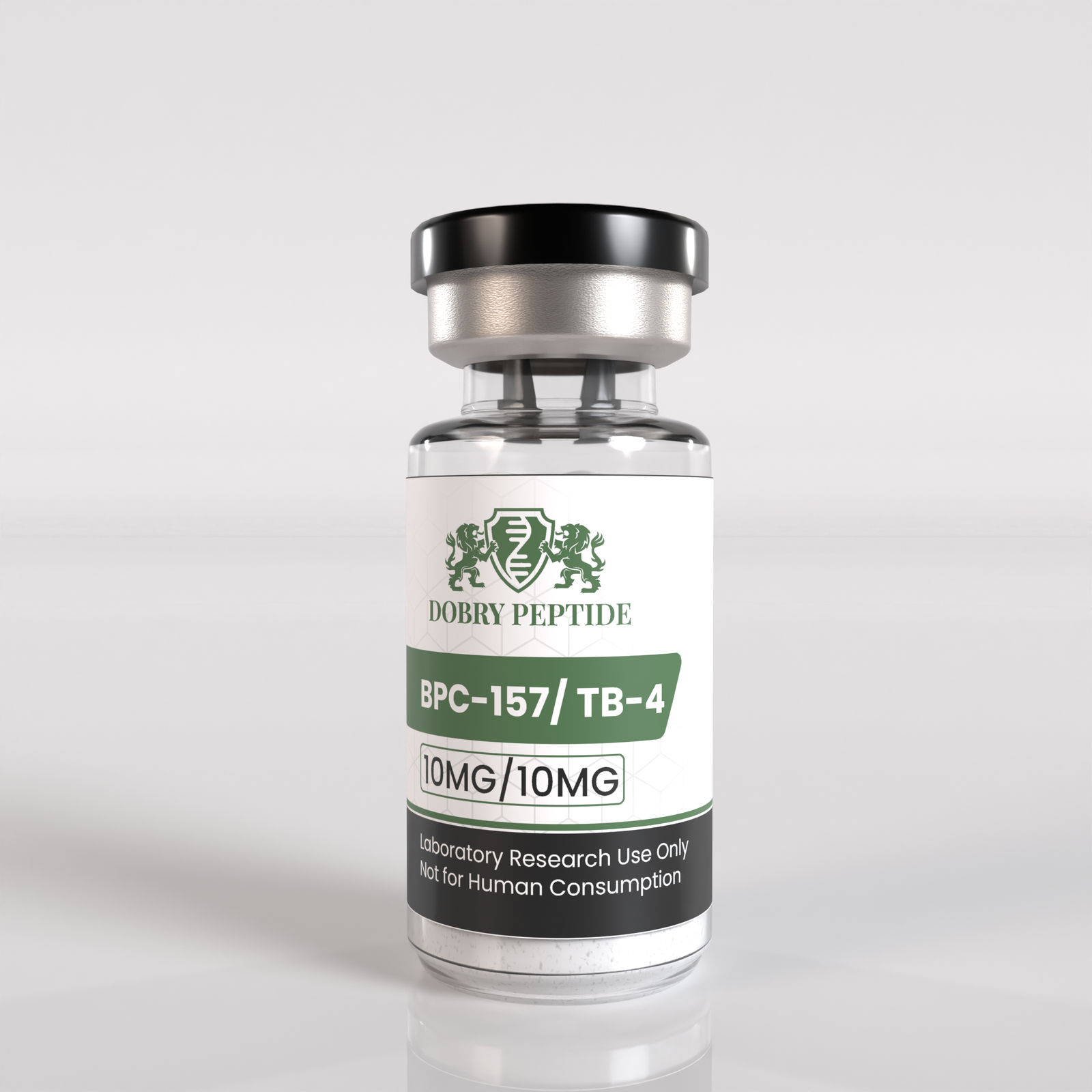
BPC-157 / TB-4
BPC-157 / TB-4 is a research peptide combination composed of two extensively studied compounds: BPC-157, a synthetic fragment derived from a naturally occurring body protection compound, and Thymosin Beta-4 (TB-4), a naturally occurring peptide involved in cellular migration and tissue repair signaling. At Dobtry Peptides, this combination is supplied exclusively for laboratory research and in-vitro scientific investigation.
This dual-peptide formulation is commonly utilized in experimental models exploring regenerative biology, tissue repair mechanisms, angiogenesis, and cellular signaling pathways. The complementary research profiles of BPC-157 and TB-4 make this combination valuable for investigating coordinated cellular recovery and structural integrity processes under controlled laboratory conditions.
Overview
BPC-157 is widely researched for its involvement in cellular repair pathways, vascular integrity, and inflammatory signaling modulation. TB-4, on the other hand, is studied for its role in actin regulation, cell migration, and tissue remodeling processes. When examined together, these peptides provide researchers with a robust model for studying complex regenerative and repair-related biological mechanisms.
In laboratory settings, the BPC-157 / TB-4 combination is frequently used in research involving musculoskeletal systems, soft tissue models, vascular biology, and cellular stress response pathways.
- Supports investigation of cellular repair and regenerative signaling pathways
- Widely studied in tissue integrity and angiogenesis research models
- Combines complementary mechanisms of BPC-157 and TB-4
- Non-hormonal and non-anabolic research peptides
- Suitable for in-vitro and preclinical laboratory investigations
Specifications
- Peptide Components: BPC-157 and Thymosin Beta-4 (TB-4)
- BPC-157 Length: 15 amino acids
- TB-4 Length: 43 amino acids
- Combined Research Type: Regenerative and tissue repair peptide model
- Alternate Names: BPC-157 / TB-4 Blend, Regenerative Peptide Combination
Research Insights
Cellular Repair and Regeneration
BPC-157 / TB-4 is widely utilized in research focused on cellular repair processes, tissue regeneration pathways, and recovery signaling mechanisms. Experimental studies examine how these peptides interact with cellular growth and repair cascades.
Angiogenesis and Vascular Integrity
Research models investigate the combined effects of BPC-157 and TB-4 on endothelial signaling, vascular stability, and angiogenic pathways, making this formulation relevant for vascular biology and wound-healing research.
Cell Migration and Structural Remodeling
TB-4 is studied for its role in actin regulation and cell migration, while BPC-157 contributes to tissue integrity signaling. Together, they offer a valuable system for studying coordinated tissue remodeling processes.
Broad Regenerative Research Applications
This
Reviews
There are no reviews yet.